
Destroying The False Doctrine of Mainstream Genetics
-
Introduction
This post aims to dismantle the status quo/mainstream conception of genetics and offer a more rigorous alternative that aligns with the core principles of Ecological Psychology.
For any questions regarding this topic, either message me here or add me on discord: moqq1
Thread Song
https://www.youtube.com/watch?v=RRTQ4p7klbo
Status Quo Conception of Genetics
The mainstream conception of genetics looks like this: genes, encoded in DNA, contain the instructions for building an organism. Behavior, morphology, cognition, and disease are ultimately expressions of the genome. This is the central dogma of molecular biology.
(Crick, 1970) Posits a strict unidirectional flow where: DNA directs RNA, RNA directs protein synthesis, and proteins constitute the organism. According to Crick, information does not travel the other way. The environment, the organism's behavior, its neural activity - none of these are superior to the gene. The gene IS the sovereign cause, and everything else is a downstream effect from it.
(Dawkins, 1976 & 2006) Posits the "selfish gene" hypothesis. In this framework, individual organisms are merely temporary survival machines through which genes propagate themselves across generations. The organism's environment is relevant only insofar as it constitutes a selection pressure that filters which genes survive. The "actual" evolutionary progress/change happens at the level of DNA. < But as Michael Turvey observes in Lectures on Perception, this view entails that "DNA is sealed off from organism and environment and subject only to internal influences that are random and gradual -- so-called "microscopic stochastic" changes.The Flaw of Genome-Environment Dualism
The most fundamental error made in mainstream genetics is the one that all other problems follow from -- treating the organism and the environment as ontologically separate entities whose contributions to development can, in principle, be separated. Turvey (2009), drawing on Bunge's system as ontology, calls this organism-environment dualism, and it is precisely what the CES (Composition-Environment Structure) model is designed to dissolve.
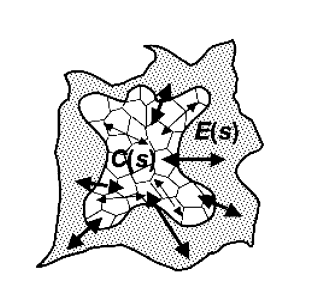
The minimal model of any arbitrary material system is: m(s) = (C(s), E(s), S(s)). C(s) is the collection of all the parts of s, its composition. E(s) is the collection of all those things other than s that can influence s or be influenced by s, the composition of s's environment. The thin arrows are the relations among the parts of s, its internal structure S⌄int(s). The thick arrows are the relations among s's components and environmental things, its external structure S⌄ext(s). The union of the internal and external structure is S(s).In the CES formulation, any system s is defined minimally by three things: its internal degrees of freedom C(s), the external degrees of freedom with which it interacts E(s), and the bonding and nonbonding relations among all of these, S(s). When s is an organism, it follows that there is no principled dissociation between organism and environment, because the very definition of the organism is inclusive of the relational structure S(s) that connects it to its surrounds (Turvey, 2009). There are no "empty environments" -- environments that exist without a corresponding organism --, and there is no organism that can be individuated apart from its environmental structure. As James J. Gibson puts it, "animal and environment make an inseparable pair. Each term implies the other."
So, why and where exactly does the mainstream doctrine fail, regarding the organism-environment dualism? > Genome-environment dualism (organism-environment dualism) assumes that the genome and the environment are making separable contributions to the phenotype. But this assumption fails... Leibniz identified the impossibility of Cartesian mind-body interactionism: to separate the genome from its relational context is to remove from it the very conditions that make its activity determinate. Therefore, genes do not express themselves, rather, they are expressed. Expressed by a system of cellular machinery, hormonal signals, neural activity, and organismic behavior that is itself embedded in, and partially constituted by, an environment (Gottlieb, 1997; Turvey,2019). Any account that treats the genome as a self-sufficient causal origin, rather than one node in a circularly causal developmental network, has already committed the first most fundamental error. This single error has made its way into almost every single mainstream study, and its consequences are palpable.
Probabilistic Epigenesis
Gilbert Gottlieb's framework of probabilistic epigenesis provides the most rigorous alternative to the central dogma of the mainstream. Proba-Epigenesis defines individual development as "characterized by an increase of complexity of organization -- that is, the emergence of new structural and functional properties and competencies--at all levels of analysis (molecular, subcellular, cellular, organismic) as a consequence of horizontal and vertical coactions among its parts, including organism-environmental coactions" (Gottlieb, 1997)
Causality is bidirectional across all levels. The mainstream doctrine draws a one-way arrow from DNA to behavior and anatomy. Proba-Epigenesis requires that every level (genetic, neural, behavioral, environmental) both influences and is influenced by every other level. Gottlieb documented considerable empirical evidence that environmental and behavioral activity affects genetic expression, not the other way around. Proteins can activate DNA; hormones, neural firing patterns, and even the organism's own movements alter which genes are expressed, when, and in which cells. This demonstrates the false premises of the mainstream doctrine and proves the arrow of influence is a loop.
(Turvey, 2019)
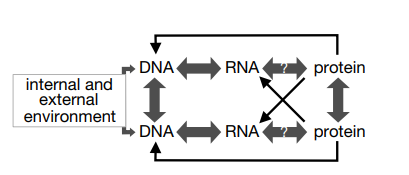
Development is execution-driven, not program-driven (Kugler, 1986; Kugler & Turvey, 1987). The mainstream doctrine conceives of phenogensis as the progressive unpacking of a pre-stored program: the genome is a script and development is its performance. Proba-Epigenesis holds the opposite framework. Only crude initial conditions are required. Once developmental processes are initiated, their unfolding is driven by the current organisational state of the entire multi-level causal network, not by a prior specification stored anywhere. The detail and precision of the outcome far exceed the detail and precision of the initial conditions, in the way that is characteristic of any self-organizing, execution-driven dynamical system.
The experiences that are causally necessary for the emergence of stereotypic behaviors are frequently non-obvious. (Turvey & Sheya, 2017) document this systemically. The absence of an identifiable experience that relates straightforwardly to a given perception-action ability does not mean that experience is irrelevant to the emergence of that ability. Consider the following cases: squirrel monkeys fed live insects during rearing develop the species-specific fear of snakes, but those fed fruit or chow do not. Honey bee larvae incubated at lower-than-normal temperatures produce a markedly impoverished waggle dance as adults. White Leghorn chicks prevented from seeing their own toes during the first two days after hatching subsequently fail to eat mealworms in the species-typical way, instead they stare at them (Wallman, 1979; Turvey & Sheya, 2017). Mallard ducklings deprived of their own prehatching vocalizations fail to show selective postnatal following behavior toward the maternal assembly call.
In every single one of these cases, the missing experience does not bear any obvious or rationally deducible relation to the absent behavior. By the standards of classical learning theory, or by the standards of genetic nativism, none of these experiences should matter -- and yet each is a causally necessary condition for the development of a species-typical competency. (Killeen & Nash, 2003) An analysis of causal structure makes clear, a sufficient causal context for producing an effect C > E contains many necessary causes that go unnoticed precisely because they are ubiquitous and unremarkable. It is only when they are experimentally disregarded that their necessity becomes visible.
Natural Selection and the Myth of the "Selfish Gene"
The selfish gene hypothesis depends on a picture of the genome as causally self-sufficient --as containing, in some sense, the "information" for building an organism, transmitting it across generations, and then directing natural selection.
DNA does not contain information... DNA sequences are, as Rod Swenson (2024) argues at length, "by any common measure the most inactive components of the entire cell there are." DNA strings do not replicate themselves; rather, they are replicated. They do not read themselves, they are the thing being read. The reading and writing of genetic sequences depends entirely on the prior existence of a replicative system--a far larger organized structure of molecular machinery, cellular architecture, and metabolic process-- that provides the context within which the sequences have any functional significance at all. To grant agential or informational properties to the sequence itself, abstracted from the system that reads and maintains it, is to commit what Levins and Lewontin (1985) called the "myth of the selfish replicator" --the reification of an abstraction into an autonomous causal force.
Turvey (2019) makes the same point from the perspective of the CES model and the organism-niche relation. Niches cannot be specified independently of the organisms that occupy them. Niches are co-implicative concepts. An organism's ecological niche is not a pre-existing slot in the environment waiting to be discovered, rather, it is constituted in the mutual relationship between organism and environment. Similarly, the "information" carried by DNA sequences is not a property of the sequences themselves but of their functional relations within a replicative system and the organism-environment system in which that replicative system exists. There can be no information without a reading process beforehand, and no reading process without a system organised to perform it.
Turvey (2019) observes that the evolution of perceptual capabilities, and by extension the evolution of the organism-environment relations that constitute development, cannot be understood through the lens of the selfish gene if DNA is sealed off from organism and environment. Evidence from Noble (2006, 2013) and Shapiro (2009, 2011) suggests that physiological function and organism-environment interactions affect both the nature and rate of DNA change. If we are to assume that this is correct, then DNA is not sealed off. DNA is then tinkerable (Turvey, 2019). In conclusion, the organism and its environment are not merely downstream of the genome, they are, across evolutionary time, upstream of it as well.
Thermodynamic Account
The laws of thermodynamics establish, irreversibly and universally, that the world is characterized by the progressive production of increasingly more highly ordered and differentiated states--more kinds of things, greater numbers of things, nested levels of things--driven by the 4th Law of Thermodynamics (the Law of Maximum Entropy Production, LMEP). But this ordering is not an anomaly to be explained away. Rather, it is the universal signature of the process by which the known universe has evolved from its initial relatively undifferentiated state to the complexly organized world we inhabit. Living systems are far from "defying" or "fighting against" the 2nd Law of Thermodynamics. Rather, they are among its most spectacular expressions -- autocatakinetic systems (ACKs) arise spontaneously when energy gradients reach critical thresholds. Living systems function to increase the rate of entropy production by expanding the spatiotemporal dimensions available for dissipation.
So, in this context, genes and genomes are what Swenson (2024) calls "rate-independent constraints" (RICs)--a particular kind of internal constraint within a replicative ACK system whose thermodynamically arbitrary sequential structure permits a kind of stochastic creativity in component production that enables living systems to connect with otherwise inaccessible potentials. But the causal efficacy of these sequences is entirely parasitic on the thermodynamic organization of the system that reads them. Genes do not drive development. The irreversible, circularly causal, 4th Law (LMEP)-governed dynamics of the whole replicative system read the genes and produce the organism.
This is where we get to the implications of genetic determinism. If the fundamental explanatory account of development is thermodynamic and systems-organizational, then the genome is not the cause of the organism. The organism, understood as an ACK system in continuous interaction with its environment, is the context within which genes have any developmental meaning at all.
Niche Construction and the Dissolution of the Gene-Environment Separation
At the evolutionary timescale, organisms actively modify their own selective environments. This is a process known as niche construction. The evolution of the oxygen-rich atmosphere of the Earth, accomplished over billions of years by photosynthetic life, which then became the selective environment that made aerobic metabolism, and thus all complex animal life, possible (Swenson, 2024). At shorter timescales, Gottlieb (2002), as summarized by Aoyama (2024), documents the case of the American hawthorn fly, which underwent rapid speciation following a behavioral change in which individual flies began laying eggs on apples (a newly available resource) rather than hawthorns. The behavioral change preceded and drove the morphological and genetic changes that followed. Clearly, behavior here is not a downstream consequence of genes, but rather, an upstream driver of the conditions under which genes are selected.
Lewontin (1982, 1983) makes the same point through the metaphor of the organism grinding its own key to fit its lock: environments do not pre-exist organisms as fully specified selection pressures. Rather, they are partly constituted by the organisms' own activities. The gene-environment distinction, so central to mainstream genetics, is therefore not a distinction between two independently specifiable entities but a retrospective analytical convenience that, when reified into an ontological separation, produces systematic theoretical distortion.
Thread Lexicon
Organism-environment system - The organism–environment system is the fundamental unit of analysis in ecological psychology. The theory of the organism-environment system starts with the proposition that in any functional sense organism and environment are inseparable and form only one unitary system. The organism cannot exist without the environment, and the environment has descriptive properties only if it is connected to the organism.
Ecological Psychology - https://en.wikipedia.org/wiki/Ecological_psychology
Probabilistic Epigenesis - https://en.wikipedia.org/wiki/Probabilistic_epigenesis
Ecological Niche - Within ecological psychology, an ecological niche is the functional domain of an organism within the organism–environment system. It is constituted by the affordances that the environment offers to a particular organism, given its bodily characteristics, skills, and mode of life.
The Law of Maximum Entropy Production (LMEP) - A system will select the path or assembly of paths out of available paths that minimizes the potential or maximizes the entropy at the fastest rate given the
constraints.Autocatakinetic systems (ACKs) - Autocatakinetic systems are self-organizing systems whose identities are constituted by a network of circularly causal processes that are maintained through the continuous turnover of their material components while dissipating environmental thermodynamic potentials.
Thread Sources
Rod Swenson (1998) Autocatakinetics, the Minimal Ontology,
and the Constitutive Logic of Ecological RelationsRod Swenson (2020) THE 4TH LAW OF THERMODYNAMICS (LMEP), AUTOCATAKINETICS, AND THE RISE,
DEVELOPMENT, AND COLLAPSE OF SOCIOECONOMIC SYSTEMSRod Swenson (2024) The Fourth Law of Thermodynamics (LMEP) and How It Makes the World
Michael T. Turvey (2019) Lectures on Perception: An Ecological Perspective
Kei Aoyama (2024) Developmental cascades and the non-trivial nature of experience
Michael T. Turvey & Adam Sheya (2017) Non-obvious influences on perception-action abilities
Michael T. Turvey (2009) On the notion and implications of organism-environment system.
Rod Swenson & Michael T. Turvey (1991) Thermodynamic Reasons for Perception-Action Cycles
Kugler & Turvey (1987) Information, natural law, and the self-assembly of rhythmic movement. Lawrence Erlbaum Associates.
Gilbert Gottlieb (1998) Normally occurring environmental and behavioral influences on gene activity: From central dogma to probabilistic epigenesis
Gilbert Gottlieb (2002) Developmental-behavioral initiation of evolutionary change
Lewontin, R. C. (1982) Organism and environment. In H. C. Plotkin (Ed.), Learning, development and culture
TLDR
Mainstream genetics operates on the assumption that genes are the primary controllers of life, while the organism and its environment are simply support roles in the background.
Genes on their own don't do much. They don't "switch on" themselves, read themselves or direct their expression. All of that happens through the activity of a living system.
Development is not the execution of a blueprint, rather, it is an improvisation. A self-organizing process that emrges from millions of reciprocal interactions happening all at once, across every level of the organism.The Implications of This Theory
So-called depression, addiction, obesity "genes" are misleading and oversimplified.
The IQ question dissolves entirely, for the question "how much of intelligence is genetic" becomes pretty much unanswerable.
So-called innate abilities of children that education is supposed to unlock completely disappear. Rather, the whole scenario is reframed to bring awareness to the early environmental richness.
Theories like Racial Realism completely dissolve, for there are no predetermined behavioral traits that are written in DNA.
Most importantly -- the nutritional science aspect.
The methodology of isolating nutrients, identifying their mechanism, and making recommendations gets completely demolished.
Because, if the organism is a circular causal system that exists within an environment, then a nutrient doesn't do anything in isolation. It does something within a particular gut microbiome composition, a particular metabolic state, stress level, sleep pattern, movement history, social context, etc.
The same nutrient in two different organism-environment systems can produce different effects.This theory gives a new perspective to the UPF critique. It suggests that UPF severs the organism from the organism-environment relationships that eating evolved within. Whole foods carry microbial diversity, variability, sensory complexity and contextual information that the organism-environment system expects and depends on.
This may give insight into the Primal Diet's success. If the organism and environment form an inseparable system, then it is evident, that the human metabolic system didn't evolve in a vacuum. It evolved with a specific set of foods, microbes, textures, compounds, visuals, and relationships.
To reference a previous point, just as the ducklings needed pre-hatching vocalizations for postnatal behaviors, the gut microbiome, immune system, and metabolic regulation may depend on inputs from raw animal foods. Specific bacteria, fatty acids and enzymes, whose absence doesn't produce an obvious deficiency
Aristotle, Ayn, Aajonus.
-
the mainsteam media indoctrinates the idea into npcs that someone is good looking as in better looking than average because they where essentially born with it. Yes what you started with matters but they reason it is mainstream is because they dont want you to find out that health is the same as looks. People can look at a vegan influencer with crooked teeth and severe eye bags that eats broccoli and still think the vegan is healthy just because of all the lies and indoctrination. With instincs and intuition that is logically impossible lol. The elites dont want you to get smart because then you will question the system. If npcs learn that health = looks, then they will see people who eat raw animal foods and think: "oh this guy doesnt have eye bags and his/her teeth is wide and straight unlike the vegan... hmmm maybe I should start eating raw meat." If npcs can make that conclusion then the world will eventually start eating raw animal foods and the trend grows gradually and the normies will naturally realize that their whole life was a lie in all aspects, not just in the aspect of food. It is too dangerous for the elites and it would be the end of the new world order.
-
Been waiting for this ever since you said it in the chat
-
Introduction
This post aims to dismantle the status quo/mainstream conception of genetics and offer a more rigorous alternative that aligns with the core principles of Ecological Psychology.
For any questions regarding this topic, either message me here or add me on discord: moqq1
Thread Song
https://www.youtube.com/watch?v=RRTQ4p7klbo
Status Quo Conception of Genetics
The mainstream conception of genetics looks like this: genes, encoded in DNA, contain the instructions for building an organism. Behavior, morphology, cognition, and disease are ultimately expressions of the genome. This is the central dogma of molecular biology.
(Crick, 1970) Posits a strict unidirectional flow where: DNA directs RNA, RNA directs protein synthesis, and proteins constitute the organism. According to Crick, information does not travel the other way. The environment, the organism's behavior, its neural activity - none of these are superior to the gene. The gene IS the sovereign cause, and everything else is a downstream effect from it.
(Dawkins, 1976 & 2006) Posits the "selfish gene" hypothesis. In this framework, individual organisms are merely temporary survival machines through which genes propagate themselves across generations. The organism's environment is relevant only insofar as it constitutes a selection pressure that filters which genes survive. The "actual" evolutionary progress/change happens at the level of DNA. < But as Michael Turvey observes in Lectures on Perception, this view entails that "DNA is sealed off from organism and environment and subject only to internal influences that are random and gradual -- so-called "microscopic stochastic" changes.The Flaw of Genome-Environment Dualism
The most fundamental error made in mainstream genetics is the one that all other problems follow from -- treating the organism and the environment as ontologically separate entities whose contributions to development can, in principle, be separated. Turvey (2009), drawing on Bunge's system as ontology, calls this organism-environment dualism, and it is precisely what the CES (Composition-Environment Structure) model is designed to dissolve.
The minimal model of any arbitrary material system is: m(s) = (C(s), E(s), S(s)). C(s) is the collection of all the parts of s, its composition. E(s) is the collection of all those things other than s that can influence s or be influenced by s, the composition of s's environment. The thin arrows are the relations among the parts of s, its internal structure S⌄int(s). The thick arrows are the relations among s's components and environmental things, its external structure S⌄ext(s). The union of the internal and external structure is S(s).In the CES formulation, any system s is defined minimally by three things: its internal degrees of freedom C(s), the external degrees of freedom with which it interacts E(s), and the bonding and nonbonding relations among all of these, S(s). When s is an organism, it follows that there is no principled dissociation between organism and environment, because the very definition of the organism is inclusive of the relational structure S(s) that connects it to its surrounds (Turvey, 2009). There are no "empty environments" -- environments that exist without a corresponding organism --, and there is no organism that can be individuated apart from its environmental structure. As James J. Gibson puts it, "animal and environment make an inseparable pair. Each term implies the other."
So, why and where exactly does the mainstream doctrine fail, regarding the organism-environment dualism? > Genome-environment dualism (organism-environment dualism) assumes that the genome and the environment are making separable contributions to the phenotype. But this assumption fails... Leibniz identified the impossibility of Cartesian mind-body interactionism: to separate the genome from its relational context is to remove from it the very conditions that make its activity determinate. Therefore, genes do not express themselves, rather, they are expressed. Expressed by a system of cellular machinery, hormonal signals, neural activity, and organismic behavior that is itself embedded in, and partially constituted by, an environment (Gottlieb, 1997; Turvey,2019). Any account that treats the genome as a self-sufficient causal origin, rather than one node in a circularly causal developmental network, has already committed the first most fundamental error. This single error has made its way into almost every single mainstream study, and its consequences are palpable.
Probabilistic Epigenesis
Gilbert Gottlieb's framework of probabilistic epigenesis provides the most rigorous alternative to the central dogma of the mainstream. Proba-Epigenesis defines individual development as "characterized by an increase of complexity of organization -- that is, the emergence of new structural and functional properties and competencies--at all levels of analysis (molecular, subcellular, cellular, organismic) as a consequence of horizontal and vertical coactions among its parts, including organism-environmental coactions" (Gottlieb, 1997)
Causality is bidirectional across all levels. The mainstream doctrine draws a one-way arrow from DNA to behavior and anatomy. Proba-Epigenesis requires that every level (genetic, neural, behavioral, environmental) both influences and is influenced by every other level. Gottlieb documented considerable empirical evidence that environmental and behavioral activity affects genetic expression, not the other way around. Proteins can activate DNA; hormones, neural firing patterns, and even the organism's own movements alter which genes are expressed, when, and in which cells. This demonstrates the false premises of the mainstream doctrine and proves the arrow of influence is a loop.
(Turvey, 2019)
Development is execution-driven, not program-driven (Kugler, 1986; Kugler & Turvey, 1987). The mainstream doctrine conceives of phenogensis as the progressive unpacking of a pre-stored program: the genome is a script and development is its performance. Proba-Epigenesis holds the opposite framework. Only crude initial conditions are required. Once developmental processes are initiated, their unfolding is driven by the current organisational state of the entire multi-level causal network, not by a prior specification stored anywhere. The detail and precision of the outcome far exceed the detail and precision of the initial conditions, in the way that is characteristic of any self-organizing, execution-driven dynamical system.
The experiences that are causally necessary for the emergence of stereotypic behaviors are frequently non-obvious. (Turvey & Sheya, 2017) document this systemically. The absence of an identifiable experience that relates straightforwardly to a given perception-action ability does not mean that experience is irrelevant to the emergence of that ability. Consider the following cases: squirrel monkeys fed live insects during rearing develop the species-specific fear of snakes, but those fed fruit or chow do not. Honey bee larvae incubated at lower-than-normal temperatures produce a markedly impoverished waggle dance as adults. White Leghorn chicks prevented from seeing their own toes during the first two days after hatching subsequently fail to eat mealworms in the species-typical way, instead they stare at them (Wallman, 1979; Turvey & Sheya, 2017). Mallard ducklings deprived of their own prehatching vocalizations fail to show selective postnatal following behavior toward the maternal assembly call.
In every single one of these cases, the missing experience does not bear any obvious or rationally deducible relation to the absent behavior. By the standards of classical learning theory, or by the standards of genetic nativism, none of these experiences should matter -- and yet each is a causally necessary condition for the development of a species-typical competency. (Killeen & Nash, 2003) An analysis of causal structure makes clear, a sufficient causal context for producing an effect C > E contains many necessary causes that go unnoticed precisely because they are ubiquitous and unremarkable. It is only when they are experimentally disregarded that their necessity becomes visible.
Natural Selection and the Myth of the "Selfish Gene"
The selfish gene hypothesis depends on a picture of the genome as causally self-sufficient --as containing, in some sense, the "information" for building an organism, transmitting it across generations, and then directing natural selection.
DNA does not contain information... DNA sequences are, as Rod Swenson (2024) argues at length, "by any common measure the most inactive components of the entire cell there are." DNA strings do not replicate themselves; rather, they are replicated. They do not read themselves, they are the thing being read. The reading and writing of genetic sequences depends entirely on the prior existence of a replicative system--a far larger organized structure of molecular machinery, cellular architecture, and metabolic process-- that provides the context within which the sequences have any functional significance at all. To grant agential or informational properties to the sequence itself, abstracted from the system that reads and maintains it, is to commit what Levins and Lewontin (1985) called the "myth of the selfish replicator" --the reification of an abstraction into an autonomous causal force.
Turvey (2019) makes the same point from the perspective of the CES model and the organism-niche relation. Niches cannot be specified independently of the organisms that occupy them. Niches are co-implicative concepts. An organism's ecological niche is not a pre-existing slot in the environment waiting to be discovered, rather, it is constituted in the mutual relationship between organism and environment. Similarly, the "information" carried by DNA sequences is not a property of the sequences themselves but of their functional relations within a replicative system and the organism-environment system in which that replicative system exists. There can be no information without a reading process beforehand, and no reading process without a system organised to perform it.
Turvey (2019) observes that the evolution of perceptual capabilities, and by extension the evolution of the organism-environment relations that constitute development, cannot be understood through the lens of the selfish gene if DNA is sealed off from organism and environment. Evidence from Noble (2006, 2013) and Shapiro (2009, 2011) suggests that physiological function and organism-environment interactions affect both the nature and rate of DNA change. If we are to assume that this is correct, then DNA is not sealed off. DNA is then tinkerable (Turvey, 2019). In conclusion, the organism and its environment are not merely downstream of the genome, they are, across evolutionary time, upstream of it as well.
Thermodynamic Account
The laws of thermodynamics establish, irreversibly and universally, that the world is characterized by the progressive production of increasingly more highly ordered and differentiated states--more kinds of things, greater numbers of things, nested levels of things--driven by the 4th Law of Thermodynamics (the Law of Maximum Entropy Production, LMEP). But this ordering is not an anomaly to be explained away. Rather, it is the universal signature of the process by which the known universe has evolved from its initial relatively undifferentiated state to the complexly organized world we inhabit. Living systems are far from "defying" or "fighting against" the 2nd Law of Thermodynamics. Rather, they are among its most spectacular expressions -- autocatakinetic systems (ACKs) arise spontaneously when energy gradients reach critical thresholds. Living systems function to increase the rate of entropy production by expanding the spatiotemporal dimensions available for dissipation.
So, in this context, genes and genomes are what Swenson (2024) calls "rate-independent constraints" (RICs)--a particular kind of internal constraint within a replicative ACK system whose thermodynamically arbitrary sequential structure permits a kind of stochastic creativity in component production that enables living systems to connect with otherwise inaccessible potentials. But the causal efficacy of these sequences is entirely parasitic on the thermodynamic organization of the system that reads them. Genes do not drive development. The irreversible, circularly causal, 4th Law (LMEP)-governed dynamics of the whole replicative system read the genes and produce the organism.
This is where we get to the implications of genetic determinism. If the fundamental explanatory account of development is thermodynamic and systems-organizational, then the genome is not the cause of the organism. The organism, understood as an ACK system in continuous interaction with its environment, is the context within which genes have any developmental meaning at all.
Niche Construction and the Dissolution of the Gene-Environment Separation
At the evolutionary timescale, organisms actively modify their own selective environments. This is a process known as niche construction. The evolution of the oxygen-rich atmosphere of the Earth, accomplished over billions of years by photosynthetic life, which then became the selective environment that made aerobic metabolism, and thus all complex animal life, possible (Swenson, 2024). At shorter timescales, Gottlieb (2002), as summarized by Aoyama (2024), documents the case of the American hawthorn fly, which underwent rapid speciation following a behavioral change in which individual flies began laying eggs on apples (a newly available resource) rather than hawthorns. The behavioral change preceded and drove the morphological and genetic changes that followed. Clearly, behavior here is not a downstream consequence of genes, but rather, an upstream driver of the conditions under which genes are selected.
Lewontin (1982, 1983) makes the same point through the metaphor of the organism grinding its own key to fit its lock: environments do not pre-exist organisms as fully specified selection pressures. Rather, they are partly constituted by the organisms' own activities. The gene-environment distinction, so central to mainstream genetics, is therefore not a distinction between two independently specifiable entities but a retrospective analytical convenience that, when reified into an ontological separation, produces systematic theoretical distortion.
Thread Lexicon
Organism-environment system - The organism–environment system is the fundamental unit of analysis in ecological psychology. The theory of the organism-environment system starts with the proposition that in any functional sense organism and environment are inseparable and form only one unitary system. The organism cannot exist without the environment, and the environment has descriptive properties only if it is connected to the organism.
Ecological Psychology - https://en.wikipedia.org/wiki/Ecological_psychology
Probabilistic Epigenesis - https://en.wikipedia.org/wiki/Probabilistic_epigenesis
Ecological Niche - Within ecological psychology, an ecological niche is the functional domain of an organism within the organism–environment system. It is constituted by the affordances that the environment offers to a particular organism, given its bodily characteristics, skills, and mode of life.
The Law of Maximum Entropy Production (LMEP) - A system will select the path or assembly of paths out of available paths that minimizes the potential or maximizes the entropy at the fastest rate given the
constraints.Autocatakinetic systems (ACKs) - Autocatakinetic systems are self-organizing systems whose identities are constituted by a network of circularly causal processes that are maintained through the continuous turnover of their material components while dissipating environmental thermodynamic potentials.
Thread Sources
Rod Swenson (1998) Autocatakinetics, the Minimal Ontology,
and the Constitutive Logic of Ecological RelationsRod Swenson (2020) THE 4TH LAW OF THERMODYNAMICS (LMEP), AUTOCATAKINETICS, AND THE RISE,
DEVELOPMENT, AND COLLAPSE OF SOCIOECONOMIC SYSTEMSRod Swenson (2024) The Fourth Law of Thermodynamics (LMEP) and How It Makes the World
Michael T. Turvey (2019) Lectures on Perception: An Ecological Perspective
Kei Aoyama (2024) Developmental cascades and the non-trivial nature of experience
Michael T. Turvey & Adam Sheya (2017) Non-obvious influences on perception-action abilities
Michael T. Turvey (2009) On the notion and implications of organism-environment system.
Rod Swenson & Michael T. Turvey (1991) Thermodynamic Reasons for Perception-Action Cycles
Kugler & Turvey (1987) Information, natural law, and the self-assembly of rhythmic movement. Lawrence Erlbaum Associates.
Gilbert Gottlieb (1998) Normally occurring environmental and behavioral influences on gene activity: From central dogma to probabilistic epigenesis
Gilbert Gottlieb (2002) Developmental-behavioral initiation of evolutionary change
Lewontin, R. C. (1982) Organism and environment. In H. C. Plotkin (Ed.), Learning, development and culture
TLDR
Mainstream genetics operates on the assumption that genes are the primary controllers of life, while the organism and its environment are simply support roles in the background.
Genes on their own don't do much. They don't "switch on" themselves, read themselves or direct their expression. All of that happens through the activity of a living system.
Development is not the execution of a blueprint, rather, it is an improvisation. A self-organizing process that emrges from millions of reciprocal interactions happening all at once, across every level of the organism.The Implications of This Theory
So-called depression, addiction, obesity "genes" are misleading and oversimplified.
The IQ question dissolves entirely, for the question "how much of intelligence is genetic" becomes pretty much unanswerable.
So-called innate abilities of children that education is supposed to unlock completely disappear. Rather, the whole scenario is reframed to bring awareness to the early environmental richness.
Theories like Racial Realism completely dissolve, for there are no predetermined behavioral traits that are written in DNA.
Most importantly -- the nutritional science aspect.
The methodology of isolating nutrients, identifying their mechanism, and making recommendations gets completely demolished.
Because, if the organism is a circular causal system that exists within an environment, then a nutrient doesn't do anything in isolation. It does something within a particular gut microbiome composition, a particular metabolic state, stress level, sleep pattern, movement history, social context, etc.
The same nutrient in two different organism-environment systems can produce different effects.This theory gives a new perspective to the UPF critique. It suggests that UPF severs the organism from the organism-environment relationships that eating evolved within. Whole foods carry microbial diversity, variability, sensory complexity and contextual information that the organism-environment system expects and depends on.
This may give insight into the Primal Diet's success. If the organism and environment form an inseparable system, then it is evident, that the human metabolic system didn't evolve in a vacuum. It evolved with a specific set of foods, microbes, textures, compounds, visuals, and relationships.
To reference a previous point, just as the ducklings needed pre-hatching vocalizations for postnatal behaviors, the gut microbiome, immune system, and metabolic regulation may depend on inputs from raw animal foods. Specific bacteria, fatty acids and enzymes, whose absence doesn't produce an obvious deficiency
@Rawsei This stuff goes super complex and I couldnt grasp this in 5minutes even when I tried.
But I understood the TLDR and implications of the theory.
Reading selfish gene also helps to explains why raw animal foods makes us so healthy
the selfish gene just makes everything click for me. and the evolutionary psychology that can be extended from that.
We have unlimited evidence.
-
may our stream flow with milk and honey readable to our soul open to all
-
it also goes to say are we actually born innately with that much bacteria to operate and read our system when those before us most likely were not eating bacteria. can we get past fight or flight into a state of flow. Where the system is fully functioning past our gut lining. Could we unscroll our genes as a society and thrive within. Could we connect quantumly when our systems are on and coding. Can we clear the static between with primordial eats
-
Introduction
This post aims to dismantle the status quo/mainstream conception of genetics and offer a more rigorous alternative that aligns with the core principles of Ecological Psychology.
For any questions regarding this topic, either message me here or add me on discord: moqq1
Thread Song
https://www.youtube.com/watch?v=RRTQ4p7klbo
Status Quo Conception of Genetics
The mainstream conception of genetics looks like this: genes, encoded in DNA, contain the instructions for building an organism. Behavior, morphology, cognition, and disease are ultimately expressions of the genome. This is the central dogma of molecular biology.
(Crick, 1970) Posits a strict unidirectional flow where: DNA directs RNA, RNA directs protein synthesis, and proteins constitute the organism. According to Crick, information does not travel the other way. The environment, the organism's behavior, its neural activity - none of these are superior to the gene. The gene IS the sovereign cause, and everything else is a downstream effect from it.
(Dawkins, 1976 & 2006) Posits the "selfish gene" hypothesis. In this framework, individual organisms are merely temporary survival machines through which genes propagate themselves across generations. The organism's environment is relevant only insofar as it constitutes a selection pressure that filters which genes survive. The "actual" evolutionary progress/change happens at the level of DNA. < But as Michael Turvey observes in Lectures on Perception, this view entails that "DNA is sealed off from organism and environment and subject only to internal influences that are random and gradual -- so-called "microscopic stochastic" changes.The Flaw of Genome-Environment Dualism
The most fundamental error made in mainstream genetics is the one that all other problems follow from -- treating the organism and the environment as ontologically separate entities whose contributions to development can, in principle, be separated. Turvey (2009), drawing on Bunge's system as ontology, calls this organism-environment dualism, and it is precisely what the CES (Composition-Environment Structure) model is designed to dissolve.
The minimal model of any arbitrary material system is: m(s) = (C(s), E(s), S(s)). C(s) is the collection of all the parts of s, its composition. E(s) is the collection of all those things other than s that can influence s or be influenced by s, the composition of s's environment. The thin arrows are the relations among the parts of s, its internal structure S⌄int(s). The thick arrows are the relations among s's components and environmental things, its external structure S⌄ext(s). The union of the internal and external structure is S(s).In the CES formulation, any system s is defined minimally by three things: its internal degrees of freedom C(s), the external degrees of freedom with which it interacts E(s), and the bonding and nonbonding relations among all of these, S(s). When s is an organism, it follows that there is no principled dissociation between organism and environment, because the very definition of the organism is inclusive of the relational structure S(s) that connects it to its surrounds (Turvey, 2009). There are no "empty environments" -- environments that exist without a corresponding organism --, and there is no organism that can be individuated apart from its environmental structure. As James J. Gibson puts it, "animal and environment make an inseparable pair. Each term implies the other."
So, why and where exactly does the mainstream doctrine fail, regarding the organism-environment dualism? > Genome-environment dualism (organism-environment dualism) assumes that the genome and the environment are making separable contributions to the phenotype. But this assumption fails... Leibniz identified the impossibility of Cartesian mind-body interactionism: to separate the genome from its relational context is to remove from it the very conditions that make its activity determinate. Therefore, genes do not express themselves, rather, they are expressed. Expressed by a system of cellular machinery, hormonal signals, neural activity, and organismic behavior that is itself embedded in, and partially constituted by, an environment (Gottlieb, 1997; Turvey,2019). Any account that treats the genome as a self-sufficient causal origin, rather than one node in a circularly causal developmental network, has already committed the first most fundamental error. This single error has made its way into almost every single mainstream study, and its consequences are palpable.
Probabilistic Epigenesis
Gilbert Gottlieb's framework of probabilistic epigenesis provides the most rigorous alternative to the central dogma of the mainstream. Proba-Epigenesis defines individual development as "characterized by an increase of complexity of organization -- that is, the emergence of new structural and functional properties and competencies--at all levels of analysis (molecular, subcellular, cellular, organismic) as a consequence of horizontal and vertical coactions among its parts, including organism-environmental coactions" (Gottlieb, 1997)
Causality is bidirectional across all levels. The mainstream doctrine draws a one-way arrow from DNA to behavior and anatomy. Proba-Epigenesis requires that every level (genetic, neural, behavioral, environmental) both influences and is influenced by every other level. Gottlieb documented considerable empirical evidence that environmental and behavioral activity affects genetic expression, not the other way around. Proteins can activate DNA; hormones, neural firing patterns, and even the organism's own movements alter which genes are expressed, when, and in which cells. This demonstrates the false premises of the mainstream doctrine and proves the arrow of influence is a loop.
(Turvey, 2019)
Development is execution-driven, not program-driven (Kugler, 1986; Kugler & Turvey, 1987). The mainstream doctrine conceives of phenogensis as the progressive unpacking of a pre-stored program: the genome is a script and development is its performance. Proba-Epigenesis holds the opposite framework. Only crude initial conditions are required. Once developmental processes are initiated, their unfolding is driven by the current organisational state of the entire multi-level causal network, not by a prior specification stored anywhere. The detail and precision of the outcome far exceed the detail and precision of the initial conditions, in the way that is characteristic of any self-organizing, execution-driven dynamical system.
The experiences that are causally necessary for the emergence of stereotypic behaviors are frequently non-obvious. (Turvey & Sheya, 2017) document this systemically. The absence of an identifiable experience that relates straightforwardly to a given perception-action ability does not mean that experience is irrelevant to the emergence of that ability. Consider the following cases: squirrel monkeys fed live insects during rearing develop the species-specific fear of snakes, but those fed fruit or chow do not. Honey bee larvae incubated at lower-than-normal temperatures produce a markedly impoverished waggle dance as adults. White Leghorn chicks prevented from seeing their own toes during the first two days after hatching subsequently fail to eat mealworms in the species-typical way, instead they stare at them (Wallman, 1979; Turvey & Sheya, 2017). Mallard ducklings deprived of their own prehatching vocalizations fail to show selective postnatal following behavior toward the maternal assembly call.
In every single one of these cases, the missing experience does not bear any obvious or rationally deducible relation to the absent behavior. By the standards of classical learning theory, or by the standards of genetic nativism, none of these experiences should matter -- and yet each is a causally necessary condition for the development of a species-typical competency. (Killeen & Nash, 2003) An analysis of causal structure makes clear, a sufficient causal context for producing an effect C > E contains many necessary causes that go unnoticed precisely because they are ubiquitous and unremarkable. It is only when they are experimentally disregarded that their necessity becomes visible.
Natural Selection and the Myth of the "Selfish Gene"
The selfish gene hypothesis depends on a picture of the genome as causally self-sufficient --as containing, in some sense, the "information" for building an organism, transmitting it across generations, and then directing natural selection.
DNA does not contain information... DNA sequences are, as Rod Swenson (2024) argues at length, "by any common measure the most inactive components of the entire cell there are." DNA strings do not replicate themselves; rather, they are replicated. They do not read themselves, they are the thing being read. The reading and writing of genetic sequences depends entirely on the prior existence of a replicative system--a far larger organized structure of molecular machinery, cellular architecture, and metabolic process-- that provides the context within which the sequences have any functional significance at all. To grant agential or informational properties to the sequence itself, abstracted from the system that reads and maintains it, is to commit what Levins and Lewontin (1985) called the "myth of the selfish replicator" --the reification of an abstraction into an autonomous causal force.
Turvey (2019) makes the same point from the perspective of the CES model and the organism-niche relation. Niches cannot be specified independently of the organisms that occupy them. Niches are co-implicative concepts. An organism's ecological niche is not a pre-existing slot in the environment waiting to be discovered, rather, it is constituted in the mutual relationship between organism and environment. Similarly, the "information" carried by DNA sequences is not a property of the sequences themselves but of their functional relations within a replicative system and the organism-environment system in which that replicative system exists. There can be no information without a reading process beforehand, and no reading process without a system organised to perform it.
Turvey (2019) observes that the evolution of perceptual capabilities, and by extension the evolution of the organism-environment relations that constitute development, cannot be understood through the lens of the selfish gene if DNA is sealed off from organism and environment. Evidence from Noble (2006, 2013) and Shapiro (2009, 2011) suggests that physiological function and organism-environment interactions affect both the nature and rate of DNA change. If we are to assume that this is correct, then DNA is not sealed off. DNA is then tinkerable (Turvey, 2019). In conclusion, the organism and its environment are not merely downstream of the genome, they are, across evolutionary time, upstream of it as well.
Thermodynamic Account
The laws of thermodynamics establish, irreversibly and universally, that the world is characterized by the progressive production of increasingly more highly ordered and differentiated states--more kinds of things, greater numbers of things, nested levels of things--driven by the 4th Law of Thermodynamics (the Law of Maximum Entropy Production, LMEP). But this ordering is not an anomaly to be explained away. Rather, it is the universal signature of the process by which the known universe has evolved from its initial relatively undifferentiated state to the complexly organized world we inhabit. Living systems are far from "defying" or "fighting against" the 2nd Law of Thermodynamics. Rather, they are among its most spectacular expressions -- autocatakinetic systems (ACKs) arise spontaneously when energy gradients reach critical thresholds. Living systems function to increase the rate of entropy production by expanding the spatiotemporal dimensions available for dissipation.
So, in this context, genes and genomes are what Swenson (2024) calls "rate-independent constraints" (RICs)--a particular kind of internal constraint within a replicative ACK system whose thermodynamically arbitrary sequential structure permits a kind of stochastic creativity in component production that enables living systems to connect with otherwise inaccessible potentials. But the causal efficacy of these sequences is entirely parasitic on the thermodynamic organization of the system that reads them. Genes do not drive development. The irreversible, circularly causal, 4th Law (LMEP)-governed dynamics of the whole replicative system read the genes and produce the organism.
This is where we get to the implications of genetic determinism. If the fundamental explanatory account of development is thermodynamic and systems-organizational, then the genome is not the cause of the organism. The organism, understood as an ACK system in continuous interaction with its environment, is the context within which genes have any developmental meaning at all.
Niche Construction and the Dissolution of the Gene-Environment Separation
At the evolutionary timescale, organisms actively modify their own selective environments. This is a process known as niche construction. The evolution of the oxygen-rich atmosphere of the Earth, accomplished over billions of years by photosynthetic life, which then became the selective environment that made aerobic metabolism, and thus all complex animal life, possible (Swenson, 2024). At shorter timescales, Gottlieb (2002), as summarized by Aoyama (2024), documents the case of the American hawthorn fly, which underwent rapid speciation following a behavioral change in which individual flies began laying eggs on apples (a newly available resource) rather than hawthorns. The behavioral change preceded and drove the morphological and genetic changes that followed. Clearly, behavior here is not a downstream consequence of genes, but rather, an upstream driver of the conditions under which genes are selected.
Lewontin (1982, 1983) makes the same point through the metaphor of the organism grinding its own key to fit its lock: environments do not pre-exist organisms as fully specified selection pressures. Rather, they are partly constituted by the organisms' own activities. The gene-environment distinction, so central to mainstream genetics, is therefore not a distinction between two independently specifiable entities but a retrospective analytical convenience that, when reified into an ontological separation, produces systematic theoretical distortion.
Thread Lexicon
Organism-environment system - The organism–environment system is the fundamental unit of analysis in ecological psychology. The theory of the organism-environment system starts with the proposition that in any functional sense organism and environment are inseparable and form only one unitary system. The organism cannot exist without the environment, and the environment has descriptive properties only if it is connected to the organism.
Ecological Psychology - https://en.wikipedia.org/wiki/Ecological_psychology
Probabilistic Epigenesis - https://en.wikipedia.org/wiki/Probabilistic_epigenesis
Ecological Niche - Within ecological psychology, an ecological niche is the functional domain of an organism within the organism–environment system. It is constituted by the affordances that the environment offers to a particular organism, given its bodily characteristics, skills, and mode of life.
The Law of Maximum Entropy Production (LMEP) - A system will select the path or assembly of paths out of available paths that minimizes the potential or maximizes the entropy at the fastest rate given the
constraints.Autocatakinetic systems (ACKs) - Autocatakinetic systems are self-organizing systems whose identities are constituted by a network of circularly causal processes that are maintained through the continuous turnover of their material components while dissipating environmental thermodynamic potentials.
Thread Sources
Rod Swenson (1998) Autocatakinetics, the Minimal Ontology,
and the Constitutive Logic of Ecological RelationsRod Swenson (2020) THE 4TH LAW OF THERMODYNAMICS (LMEP), AUTOCATAKINETICS, AND THE RISE,
DEVELOPMENT, AND COLLAPSE OF SOCIOECONOMIC SYSTEMSRod Swenson (2024) The Fourth Law of Thermodynamics (LMEP) and How It Makes the World
Michael T. Turvey (2019) Lectures on Perception: An Ecological Perspective
Kei Aoyama (2024) Developmental cascades and the non-trivial nature of experience
Michael T. Turvey & Adam Sheya (2017) Non-obvious influences on perception-action abilities
Michael T. Turvey (2009) On the notion and implications of organism-environment system.
Rod Swenson & Michael T. Turvey (1991) Thermodynamic Reasons for Perception-Action Cycles
Kugler & Turvey (1987) Information, natural law, and the self-assembly of rhythmic movement. Lawrence Erlbaum Associates.
Gilbert Gottlieb (1998) Normally occurring environmental and behavioral influences on gene activity: From central dogma to probabilistic epigenesis
Gilbert Gottlieb (2002) Developmental-behavioral initiation of evolutionary change
Lewontin, R. C. (1982) Organism and environment. In H. C. Plotkin (Ed.), Learning, development and culture
TLDR
Mainstream genetics operates on the assumption that genes are the primary controllers of life, while the organism and its environment are simply support roles in the background.
Genes on their own don't do much. They don't "switch on" themselves, read themselves or direct their expression. All of that happens through the activity of a living system.
Development is not the execution of a blueprint, rather, it is an improvisation. A self-organizing process that emrges from millions of reciprocal interactions happening all at once, across every level of the organism.The Implications of This Theory
So-called depression, addiction, obesity "genes" are misleading and oversimplified.
The IQ question dissolves entirely, for the question "how much of intelligence is genetic" becomes pretty much unanswerable.
So-called innate abilities of children that education is supposed to unlock completely disappear. Rather, the whole scenario is reframed to bring awareness to the early environmental richness.
Theories like Racial Realism completely dissolve, for there are no predetermined behavioral traits that are written in DNA.
Most importantly -- the nutritional science aspect.
The methodology of isolating nutrients, identifying their mechanism, and making recommendations gets completely demolished.
Because, if the organism is a circular causal system that exists within an environment, then a nutrient doesn't do anything in isolation. It does something within a particular gut microbiome composition, a particular metabolic state, stress level, sleep pattern, movement history, social context, etc.
The same nutrient in two different organism-environment systems can produce different effects.This theory gives a new perspective to the UPF critique. It suggests that UPF severs the organism from the organism-environment relationships that eating evolved within. Whole foods carry microbial diversity, variability, sensory complexity and contextual information that the organism-environment system expects and depends on.
This may give insight into the Primal Diet's success. If the organism and environment form an inseparable system, then it is evident, that the human metabolic system didn't evolve in a vacuum. It evolved with a specific set of foods, microbes, textures, compounds, visuals, and relationships.
To reference a previous point, just as the ducklings needed pre-hatching vocalizations for postnatal behaviors, the gut microbiome, immune system, and metabolic regulation may depend on inputs from raw animal foods. Specific bacteria, fatty acids and enzymes, whose absence doesn't produce an obvious deficiency
@Rawsei show me this dna molecule please
-
Introduction
This post aims to dismantle the status quo/mainstream conception of genetics and offer a more rigorous alternative that aligns with the core principles of Ecological Psychology.
For any questions regarding this topic, either message me here or add me on discord: moqq1
Thread Song
https://www.youtube.com/watch?v=RRTQ4p7klbo
Status Quo Conception of Genetics
The mainstream conception of genetics looks like this: genes, encoded in DNA, contain the instructions for building an organism. Behavior, morphology, cognition, and disease are ultimately expressions of the genome. This is the central dogma of molecular biology.
(Crick, 1970) Posits a strict unidirectional flow where: DNA directs RNA, RNA directs protein synthesis, and proteins constitute the organism. According to Crick, information does not travel the other way. The environment, the organism's behavior, its neural activity - none of these are superior to the gene. The gene IS the sovereign cause, and everything else is a downstream effect from it.
(Dawkins, 1976 & 2006) Posits the "selfish gene" hypothesis. In this framework, individual organisms are merely temporary survival machines through which genes propagate themselves across generations. The organism's environment is relevant only insofar as it constitutes a selection pressure that filters which genes survive. The "actual" evolutionary progress/change happens at the level of DNA. < But as Michael Turvey observes in Lectures on Perception, this view entails that "DNA is sealed off from organism and environment and subject only to internal influences that are random and gradual -- so-called "microscopic stochastic" changes.The Flaw of Genome-Environment Dualism
The most fundamental error made in mainstream genetics is the one that all other problems follow from -- treating the organism and the environment as ontologically separate entities whose contributions to development can, in principle, be separated. Turvey (2009), drawing on Bunge's system as ontology, calls this organism-environment dualism, and it is precisely what the CES (Composition-Environment Structure) model is designed to dissolve.
The minimal model of any arbitrary material system is: m(s) = (C(s), E(s), S(s)). C(s) is the collection of all the parts of s, its composition. E(s) is the collection of all those things other than s that can influence s or be influenced by s, the composition of s's environment. The thin arrows are the relations among the parts of s, its internal structure S⌄int(s). The thick arrows are the relations among s's components and environmental things, its external structure S⌄ext(s). The union of the internal and external structure is S(s).In the CES formulation, any system s is defined minimally by three things: its internal degrees of freedom C(s), the external degrees of freedom with which it interacts E(s), and the bonding and nonbonding relations among all of these, S(s). When s is an organism, it follows that there is no principled dissociation between organism and environment, because the very definition of the organism is inclusive of the relational structure S(s) that connects it to its surrounds (Turvey, 2009). There are no "empty environments" -- environments that exist without a corresponding organism --, and there is no organism that can be individuated apart from its environmental structure. As James J. Gibson puts it, "animal and environment make an inseparable pair. Each term implies the other."
So, why and where exactly does the mainstream doctrine fail, regarding the organism-environment dualism? > Genome-environment dualism (organism-environment dualism) assumes that the genome and the environment are making separable contributions to the phenotype. But this assumption fails... Leibniz identified the impossibility of Cartesian mind-body interactionism: to separate the genome from its relational context is to remove from it the very conditions that make its activity determinate. Therefore, genes do not express themselves, rather, they are expressed. Expressed by a system of cellular machinery, hormonal signals, neural activity, and organismic behavior that is itself embedded in, and partially constituted by, an environment (Gottlieb, 1997; Turvey,2019). Any account that treats the genome as a self-sufficient causal origin, rather than one node in a circularly causal developmental network, has already committed the first most fundamental error. This single error has made its way into almost every single mainstream study, and its consequences are palpable.
Probabilistic Epigenesis
Gilbert Gottlieb's framework of probabilistic epigenesis provides the most rigorous alternative to the central dogma of the mainstream. Proba-Epigenesis defines individual development as "characterized by an increase of complexity of organization -- that is, the emergence of new structural and functional properties and competencies--at all levels of analysis (molecular, subcellular, cellular, organismic) as a consequence of horizontal and vertical coactions among its parts, including organism-environmental coactions" (Gottlieb, 1997)
Causality is bidirectional across all levels. The mainstream doctrine draws a one-way arrow from DNA to behavior and anatomy. Proba-Epigenesis requires that every level (genetic, neural, behavioral, environmental) both influences and is influenced by every other level. Gottlieb documented considerable empirical evidence that environmental and behavioral activity affects genetic expression, not the other way around. Proteins can activate DNA; hormones, neural firing patterns, and even the organism's own movements alter which genes are expressed, when, and in which cells. This demonstrates the false premises of the mainstream doctrine and proves the arrow of influence is a loop.
(Turvey, 2019)
Development is execution-driven, not program-driven (Kugler, 1986; Kugler & Turvey, 1987). The mainstream doctrine conceives of phenogensis as the progressive unpacking of a pre-stored program: the genome is a script and development is its performance. Proba-Epigenesis holds the opposite framework. Only crude initial conditions are required. Once developmental processes are initiated, their unfolding is driven by the current organisational state of the entire multi-level causal network, not by a prior specification stored anywhere. The detail and precision of the outcome far exceed the detail and precision of the initial conditions, in the way that is characteristic of any self-organizing, execution-driven dynamical system.
The experiences that are causally necessary for the emergence of stereotypic behaviors are frequently non-obvious. (Turvey & Sheya, 2017) document this systemically. The absence of an identifiable experience that relates straightforwardly to a given perception-action ability does not mean that experience is irrelevant to the emergence of that ability. Consider the following cases: squirrel monkeys fed live insects during rearing develop the species-specific fear of snakes, but those fed fruit or chow do not. Honey bee larvae incubated at lower-than-normal temperatures produce a markedly impoverished waggle dance as adults. White Leghorn chicks prevented from seeing their own toes during the first two days after hatching subsequently fail to eat mealworms in the species-typical way, instead they stare at them (Wallman, 1979; Turvey & Sheya, 2017). Mallard ducklings deprived of their own prehatching vocalizations fail to show selective postnatal following behavior toward the maternal assembly call.
In every single one of these cases, the missing experience does not bear any obvious or rationally deducible relation to the absent behavior. By the standards of classical learning theory, or by the standards of genetic nativism, none of these experiences should matter -- and yet each is a causally necessary condition for the development of a species-typical competency. (Killeen & Nash, 2003) An analysis of causal structure makes clear, a sufficient causal context for producing an effect C > E contains many necessary causes that go unnoticed precisely because they are ubiquitous and unremarkable. It is only when they are experimentally disregarded that their necessity becomes visible.
Natural Selection and the Myth of the "Selfish Gene"
The selfish gene hypothesis depends on a picture of the genome as causally self-sufficient --as containing, in some sense, the "information" for building an organism, transmitting it across generations, and then directing natural selection.
DNA does not contain information... DNA sequences are, as Rod Swenson (2024) argues at length, "by any common measure the most inactive components of the entire cell there are." DNA strings do not replicate themselves; rather, they are replicated. They do not read themselves, they are the thing being read. The reading and writing of genetic sequences depends entirely on the prior existence of a replicative system--a far larger organized structure of molecular machinery, cellular architecture, and metabolic process-- that provides the context within which the sequences have any functional significance at all. To grant agential or informational properties to the sequence itself, abstracted from the system that reads and maintains it, is to commit what Levins and Lewontin (1985) called the "myth of the selfish replicator" --the reification of an abstraction into an autonomous causal force.
Turvey (2019) makes the same point from the perspective of the CES model and the organism-niche relation. Niches cannot be specified independently of the organisms that occupy them. Niches are co-implicative concepts. An organism's ecological niche is not a pre-existing slot in the environment waiting to be discovered, rather, it is constituted in the mutual relationship between organism and environment. Similarly, the "information" carried by DNA sequences is not a property of the sequences themselves but of their functional relations within a replicative system and the organism-environment system in which that replicative system exists. There can be no information without a reading process beforehand, and no reading process without a system organised to perform it.
Turvey (2019) observes that the evolution of perceptual capabilities, and by extension the evolution of the organism-environment relations that constitute development, cannot be understood through the lens of the selfish gene if DNA is sealed off from organism and environment. Evidence from Noble (2006, 2013) and Shapiro (2009, 2011) suggests that physiological function and organism-environment interactions affect both the nature and rate of DNA change. If we are to assume that this is correct, then DNA is not sealed off. DNA is then tinkerable (Turvey, 2019). In conclusion, the organism and its environment are not merely downstream of the genome, they are, across evolutionary time, upstream of it as well.
Thermodynamic Account
The laws of thermodynamics establish, irreversibly and universally, that the world is characterized by the progressive production of increasingly more highly ordered and differentiated states--more kinds of things, greater numbers of things, nested levels of things--driven by the 4th Law of Thermodynamics (the Law of Maximum Entropy Production, LMEP). But this ordering is not an anomaly to be explained away. Rather, it is the universal signature of the process by which the known universe has evolved from its initial relatively undifferentiated state to the complexly organized world we inhabit. Living systems are far from "defying" or "fighting against" the 2nd Law of Thermodynamics. Rather, they are among its most spectacular expressions -- autocatakinetic systems (ACKs) arise spontaneously when energy gradients reach critical thresholds. Living systems function to increase the rate of entropy production by expanding the spatiotemporal dimensions available for dissipation.
So, in this context, genes and genomes are what Swenson (2024) calls "rate-independent constraints" (RICs)--a particular kind of internal constraint within a replicative ACK system whose thermodynamically arbitrary sequential structure permits a kind of stochastic creativity in component production that enables living systems to connect with otherwise inaccessible potentials. But the causal efficacy of these sequences is entirely parasitic on the thermodynamic organization of the system that reads them. Genes do not drive development. The irreversible, circularly causal, 4th Law (LMEP)-governed dynamics of the whole replicative system read the genes and produce the organism.
This is where we get to the implications of genetic determinism. If the fundamental explanatory account of development is thermodynamic and systems-organizational, then the genome is not the cause of the organism. The organism, understood as an ACK system in continuous interaction with its environment, is the context within which genes have any developmental meaning at all.
Niche Construction and the Dissolution of the Gene-Environment Separation
At the evolutionary timescale, organisms actively modify their own selective environments. This is a process known as niche construction. The evolution of the oxygen-rich atmosphere of the Earth, accomplished over billions of years by photosynthetic life, which then became the selective environment that made aerobic metabolism, and thus all complex animal life, possible (Swenson, 2024). At shorter timescales, Gottlieb (2002), as summarized by Aoyama (2024), documents the case of the American hawthorn fly, which underwent rapid speciation following a behavioral change in which individual flies began laying eggs on apples (a newly available resource) rather than hawthorns. The behavioral change preceded and drove the morphological and genetic changes that followed. Clearly, behavior here is not a downstream consequence of genes, but rather, an upstream driver of the conditions under which genes are selected.
Lewontin (1982, 1983) makes the same point through the metaphor of the organism grinding its own key to fit its lock: environments do not pre-exist organisms as fully specified selection pressures. Rather, they are partly constituted by the organisms' own activities. The gene-environment distinction, so central to mainstream genetics, is therefore not a distinction between two independently specifiable entities but a retrospective analytical convenience that, when reified into an ontological separation, produces systematic theoretical distortion.
Thread Lexicon
Organism-environment system - The organism–environment system is the fundamental unit of analysis in ecological psychology. The theory of the organism-environment system starts with the proposition that in any functional sense organism and environment are inseparable and form only one unitary system. The organism cannot exist without the environment, and the environment has descriptive properties only if it is connected to the organism.
Ecological Psychology - https://en.wikipedia.org/wiki/Ecological_psychology
Probabilistic Epigenesis - https://en.wikipedia.org/wiki/Probabilistic_epigenesis
Ecological Niche - Within ecological psychology, an ecological niche is the functional domain of an organism within the organism–environment system. It is constituted by the affordances that the environment offers to a particular organism, given its bodily characteristics, skills, and mode of life.
The Law of Maximum Entropy Production (LMEP) - A system will select the path or assembly of paths out of available paths that minimizes the potential or maximizes the entropy at the fastest rate given the
constraints.Autocatakinetic systems (ACKs) - Autocatakinetic systems are self-organizing systems whose identities are constituted by a network of circularly causal processes that are maintained through the continuous turnover of their material components while dissipating environmental thermodynamic potentials.
Thread Sources
Rod Swenson (1998) Autocatakinetics, the Minimal Ontology,
and the Constitutive Logic of Ecological RelationsRod Swenson (2020) THE 4TH LAW OF THERMODYNAMICS (LMEP), AUTOCATAKINETICS, AND THE RISE,
DEVELOPMENT, AND COLLAPSE OF SOCIOECONOMIC SYSTEMSRod Swenson (2024) The Fourth Law of Thermodynamics (LMEP) and How It Makes the World
Michael T. Turvey (2019) Lectures on Perception: An Ecological Perspective
Kei Aoyama (2024) Developmental cascades and the non-trivial nature of experience
Michael T. Turvey & Adam Sheya (2017) Non-obvious influences on perception-action abilities
Michael T. Turvey (2009) On the notion and implications of organism-environment system.
Rod Swenson & Michael T. Turvey (1991) Thermodynamic Reasons for Perception-Action Cycles
Kugler & Turvey (1987) Information, natural law, and the self-assembly of rhythmic movement. Lawrence Erlbaum Associates.
Gilbert Gottlieb (1998) Normally occurring environmental and behavioral influences on gene activity: From central dogma to probabilistic epigenesis
Gilbert Gottlieb (2002) Developmental-behavioral initiation of evolutionary change
Lewontin, R. C. (1982) Organism and environment. In H. C. Plotkin (Ed.), Learning, development and culture
TLDR
Mainstream genetics operates on the assumption that genes are the primary controllers of life, while the organism and its environment are simply support roles in the background.
Genes on their own don't do much. They don't "switch on" themselves, read themselves or direct their expression. All of that happens through the activity of a living system.
Development is not the execution of a blueprint, rather, it is an improvisation. A self-organizing process that emrges from millions of reciprocal interactions happening all at once, across every level of the organism.The Implications of This Theory
So-called depression, addiction, obesity "genes" are misleading and oversimplified.
The IQ question dissolves entirely, for the question "how much of intelligence is genetic" becomes pretty much unanswerable.
So-called innate abilities of children that education is supposed to unlock completely disappear. Rather, the whole scenario is reframed to bring awareness to the early environmental richness.
Theories like Racial Realism completely dissolve, for there are no predetermined behavioral traits that are written in DNA.
Most importantly -- the nutritional science aspect.
The methodology of isolating nutrients, identifying their mechanism, and making recommendations gets completely demolished.
Because, if the organism is a circular causal system that exists within an environment, then a nutrient doesn't do anything in isolation. It does something within a particular gut microbiome composition, a particular metabolic state, stress level, sleep pattern, movement history, social context, etc.
The same nutrient in two different organism-environment systems can produce different effects.This theory gives a new perspective to the UPF critique. It suggests that UPF severs the organism from the organism-environment relationships that eating evolved within. Whole foods carry microbial diversity, variability, sensory complexity and contextual information that the organism-environment system expects and depends on.
This may give insight into the Primal Diet's success. If the organism and environment form an inseparable system, then it is evident, that the human metabolic system didn't evolve in a vacuum. It evolved with a specific set of foods, microbes, textures, compounds, visuals, and relationships.
To reference a previous point, just as the ducklings needed pre-hatching vocalizations for postnatal behaviors, the gut microbiome, immune system, and metabolic regulation may depend on inputs from raw animal foods. Specific bacteria, fatty acids and enzymes, whose absence doesn't produce an obvious deficiency
-
Introduction
This post aims to dismantle the status quo/mainstream conception of genetics and offer a more rigorous alternative that aligns with the core principles of Ecological Psychology.
For any questions regarding this topic, either message me here or add me on discord: moqq1
Thread Song
https://www.youtube.com/watch?v=RRTQ4p7klbo
Status Quo Conception of Genetics
The mainstream conception of genetics looks like this: genes, encoded in DNA, contain the instructions for building an organism. Behavior, morphology, cognition, and disease are ultimately expressions of the genome. This is the central dogma of molecular biology.
(Crick, 1970) Posits a strict unidirectional flow where: DNA directs RNA, RNA directs protein synthesis, and proteins constitute the organism. According to Crick, information does not travel the other way. The environment, the organism's behavior, its neural activity - none of these are superior to the gene. The gene IS the sovereign cause, and everything else is a downstream effect from it.
(Dawkins, 1976 & 2006) Posits the "selfish gene" hypothesis. In this framework, individual organisms are merely temporary survival machines through which genes propagate themselves across generations. The organism's environment is relevant only insofar as it constitutes a selection pressure that filters which genes survive. The "actual" evolutionary progress/change happens at the level of DNA. < But as Michael Turvey observes in Lectures on Perception, this view entails that "DNA is sealed off from organism and environment and subject only to internal influences that are random and gradual -- so-called "microscopic stochastic" changes.The Flaw of Genome-Environment Dualism
The most fundamental error made in mainstream genetics is the one that all other problems follow from -- treating the organism and the environment as ontologically separate entities whose contributions to development can, in principle, be separated. Turvey (2009), drawing on Bunge's system as ontology, calls this organism-environment dualism, and it is precisely what the CES (Composition-Environment Structure) model is designed to dissolve.
The minimal model of any arbitrary material system is: m(s) = (C(s), E(s), S(s)). C(s) is the collection of all the parts of s, its composition. E(s) is the collection of all those things other than s that can influence s or be influenced by s, the composition of s's environment. The thin arrows are the relations among the parts of s, its internal structure S⌄int(s). The thick arrows are the relations among s's components and environmental things, its external structure S⌄ext(s). The union of the internal and external structure is S(s).In the CES formulation, any system s is defined minimally by three things: its internal degrees of freedom C(s), the external degrees of freedom with which it interacts E(s), and the bonding and nonbonding relations among all of these, S(s). When s is an organism, it follows that there is no principled dissociation between organism and environment, because the very definition of the organism is inclusive of the relational structure S(s) that connects it to its surrounds (Turvey, 2009). There are no "empty environments" -- environments that exist without a corresponding organism --, and there is no organism that can be individuated apart from its environmental structure. As James J. Gibson puts it, "animal and environment make an inseparable pair. Each term implies the other."
So, why and where exactly does the mainstream doctrine fail, regarding the organism-environment dualism? > Genome-environment dualism (organism-environment dualism) assumes that the genome and the environment are making separable contributions to the phenotype. But this assumption fails... Leibniz identified the impossibility of Cartesian mind-body interactionism: to separate the genome from its relational context is to remove from it the very conditions that make its activity determinate. Therefore, genes do not express themselves, rather, they are expressed. Expressed by a system of cellular machinery, hormonal signals, neural activity, and organismic behavior that is itself embedded in, and partially constituted by, an environment (Gottlieb, 1997; Turvey,2019). Any account that treats the genome as a self-sufficient causal origin, rather than one node in a circularly causal developmental network, has already committed the first most fundamental error. This single error has made its way into almost every single mainstream study, and its consequences are palpable.
Probabilistic Epigenesis
Gilbert Gottlieb's framework of probabilistic epigenesis provides the most rigorous alternative to the central dogma of the mainstream. Proba-Epigenesis defines individual development as "characterized by an increase of complexity of organization -- that is, the emergence of new structural and functional properties and competencies--at all levels of analysis (molecular, subcellular, cellular, organismic) as a consequence of horizontal and vertical coactions among its parts, including organism-environmental coactions" (Gottlieb, 1997)
Causality is bidirectional across all levels. The mainstream doctrine draws a one-way arrow from DNA to behavior and anatomy. Proba-Epigenesis requires that every level (genetic, neural, behavioral, environmental) both influences and is influenced by every other level. Gottlieb documented considerable empirical evidence that environmental and behavioral activity affects genetic expression, not the other way around. Proteins can activate DNA; hormones, neural firing patterns, and even the organism's own movements alter which genes are expressed, when, and in which cells. This demonstrates the false premises of the mainstream doctrine and proves the arrow of influence is a loop.
(Turvey, 2019)
Development is execution-driven, not program-driven (Kugler, 1986; Kugler & Turvey, 1987). The mainstream doctrine conceives of phenogensis as the progressive unpacking of a pre-stored program: the genome is a script and development is its performance. Proba-Epigenesis holds the opposite framework. Only crude initial conditions are required. Once developmental processes are initiated, their unfolding is driven by the current organisational state of the entire multi-level causal network, not by a prior specification stored anywhere. The detail and precision of the outcome far exceed the detail and precision of the initial conditions, in the way that is characteristic of any self-organizing, execution-driven dynamical system.
The experiences that are causally necessary for the emergence of stereotypic behaviors are frequently non-obvious. (Turvey & Sheya, 2017) document this systemically. The absence of an identifiable experience that relates straightforwardly to a given perception-action ability does not mean that experience is irrelevant to the emergence of that ability. Consider the following cases: squirrel monkeys fed live insects during rearing develop the species-specific fear of snakes, but those fed fruit or chow do not. Honey bee larvae incubated at lower-than-normal temperatures produce a markedly impoverished waggle dance as adults. White Leghorn chicks prevented from seeing their own toes during the first two days after hatching subsequently fail to eat mealworms in the species-typical way, instead they stare at them (Wallman, 1979; Turvey & Sheya, 2017). Mallard ducklings deprived of their own prehatching vocalizations fail to show selective postnatal following behavior toward the maternal assembly call.
In every single one of these cases, the missing experience does not bear any obvious or rationally deducible relation to the absent behavior. By the standards of classical learning theory, or by the standards of genetic nativism, none of these experiences should matter -- and yet each is a causally necessary condition for the development of a species-typical competency. (Killeen & Nash, 2003) An analysis of causal structure makes clear, a sufficient causal context for producing an effect C > E contains many necessary causes that go unnoticed precisely because they are ubiquitous and unremarkable. It is only when they are experimentally disregarded that their necessity becomes visible.
Natural Selection and the Myth of the "Selfish Gene"
The selfish gene hypothesis depends on a picture of the genome as causally self-sufficient --as containing, in some sense, the "information" for building an organism, transmitting it across generations, and then directing natural selection.
DNA does not contain information... DNA sequences are, as Rod Swenson (2024) argues at length, "by any common measure the most inactive components of the entire cell there are." DNA strings do not replicate themselves; rather, they are replicated. They do not read themselves, they are the thing being read. The reading and writing of genetic sequences depends entirely on the prior existence of a replicative system--a far larger organized structure of molecular machinery, cellular architecture, and metabolic process-- that provides the context within which the sequences have any functional significance at all. To grant agential or informational properties to the sequence itself, abstracted from the system that reads and maintains it, is to commit what Levins and Lewontin (1985) called the "myth of the selfish replicator" --the reification of an abstraction into an autonomous causal force.
Turvey (2019) makes the same point from the perspective of the CES model and the organism-niche relation. Niches cannot be specified independently of the organisms that occupy them. Niches are co-implicative concepts. An organism's ecological niche is not a pre-existing slot in the environment waiting to be discovered, rather, it is constituted in the mutual relationship between organism and environment. Similarly, the "information" carried by DNA sequences is not a property of the sequences themselves but of their functional relations within a replicative system and the organism-environment system in which that replicative system exists. There can be no information without a reading process beforehand, and no reading process without a system organised to perform it.
Turvey (2019) observes that the evolution of perceptual capabilities, and by extension the evolution of the organism-environment relations that constitute development, cannot be understood through the lens of the selfish gene if DNA is sealed off from organism and environment. Evidence from Noble (2006, 2013) and Shapiro (2009, 2011) suggests that physiological function and organism-environment interactions affect both the nature and rate of DNA change. If we are to assume that this is correct, then DNA is not sealed off. DNA is then tinkerable (Turvey, 2019). In conclusion, the organism and its environment are not merely downstream of the genome, they are, across evolutionary time, upstream of it as well.
Thermodynamic Account
The laws of thermodynamics establish, irreversibly and universally, that the world is characterized by the progressive production of increasingly more highly ordered and differentiated states--more kinds of things, greater numbers of things, nested levels of things--driven by the 4th Law of Thermodynamics (the Law of Maximum Entropy Production, LMEP). But this ordering is not an anomaly to be explained away. Rather, it is the universal signature of the process by which the known universe has evolved from its initial relatively undifferentiated state to the complexly organized world we inhabit. Living systems are far from "defying" or "fighting against" the 2nd Law of Thermodynamics. Rather, they are among its most spectacular expressions -- autocatakinetic systems (ACKs) arise spontaneously when energy gradients reach critical thresholds. Living systems function to increase the rate of entropy production by expanding the spatiotemporal dimensions available for dissipation.
So, in this context, genes and genomes are what Swenson (2024) calls "rate-independent constraints" (RICs)--a particular kind of internal constraint within a replicative ACK system whose thermodynamically arbitrary sequential structure permits a kind of stochastic creativity in component production that enables living systems to connect with otherwise inaccessible potentials. But the causal efficacy of these sequences is entirely parasitic on the thermodynamic organization of the system that reads them. Genes do not drive development. The irreversible, circularly causal, 4th Law (LMEP)-governed dynamics of the whole replicative system read the genes and produce the organism.
This is where we get to the implications of genetic determinism. If the fundamental explanatory account of development is thermodynamic and systems-organizational, then the genome is not the cause of the organism. The organism, understood as an ACK system in continuous interaction with its environment, is the context within which genes have any developmental meaning at all.
Niche Construction and the Dissolution of the Gene-Environment Separation
At the evolutionary timescale, organisms actively modify their own selective environments. This is a process known as niche construction. The evolution of the oxygen-rich atmosphere of the Earth, accomplished over billions of years by photosynthetic life, which then became the selective environment that made aerobic metabolism, and thus all complex animal life, possible (Swenson, 2024). At shorter timescales, Gottlieb (2002), as summarized by Aoyama (2024), documents the case of the American hawthorn fly, which underwent rapid speciation following a behavioral change in which individual flies began laying eggs on apples (a newly available resource) rather than hawthorns. The behavioral change preceded and drove the morphological and genetic changes that followed. Clearly, behavior here is not a downstream consequence of genes, but rather, an upstream driver of the conditions under which genes are selected.
Lewontin (1982, 1983) makes the same point through the metaphor of the organism grinding its own key to fit its lock: environments do not pre-exist organisms as fully specified selection pressures. Rather, they are partly constituted by the organisms' own activities. The gene-environment distinction, so central to mainstream genetics, is therefore not a distinction between two independently specifiable entities but a retrospective analytical convenience that, when reified into an ontological separation, produces systematic theoretical distortion.
Thread Lexicon
Organism-environment system - The organism–environment system is the fundamental unit of analysis in ecological psychology. The theory of the organism-environment system starts with the proposition that in any functional sense organism and environment are inseparable and form only one unitary system. The organism cannot exist without the environment, and the environment has descriptive properties only if it is connected to the organism.
Ecological Psychology - https://en.wikipedia.org/wiki/Ecological_psychology
Probabilistic Epigenesis - https://en.wikipedia.org/wiki/Probabilistic_epigenesis
Ecological Niche - Within ecological psychology, an ecological niche is the functional domain of an organism within the organism–environment system. It is constituted by the affordances that the environment offers to a particular organism, given its bodily characteristics, skills, and mode of life.
The Law of Maximum Entropy Production (LMEP) - A system will select the path or assembly of paths out of available paths that minimizes the potential or maximizes the entropy at the fastest rate given the
constraints.Autocatakinetic systems (ACKs) - Autocatakinetic systems are self-organizing systems whose identities are constituted by a network of circularly causal processes that are maintained through the continuous turnover of their material components while dissipating environmental thermodynamic potentials.
Thread Sources
Rod Swenson (1998) Autocatakinetics, the Minimal Ontology,
and the Constitutive Logic of Ecological RelationsRod Swenson (2020) THE 4TH LAW OF THERMODYNAMICS (LMEP), AUTOCATAKINETICS, AND THE RISE,
DEVELOPMENT, AND COLLAPSE OF SOCIOECONOMIC SYSTEMSRod Swenson (2024) The Fourth Law of Thermodynamics (LMEP) and How It Makes the World
Michael T. Turvey (2019) Lectures on Perception: An Ecological Perspective
Kei Aoyama (2024) Developmental cascades and the non-trivial nature of experience
Michael T. Turvey & Adam Sheya (2017) Non-obvious influences on perception-action abilities
Michael T. Turvey (2009) On the notion and implications of organism-environment system.
Rod Swenson & Michael T. Turvey (1991) Thermodynamic Reasons for Perception-Action Cycles
Kugler & Turvey (1987) Information, natural law, and the self-assembly of rhythmic movement. Lawrence Erlbaum Associates.
Gilbert Gottlieb (1998) Normally occurring environmental and behavioral influences on gene activity: From central dogma to probabilistic epigenesis
Gilbert Gottlieb (2002) Developmental-behavioral initiation of evolutionary change
Lewontin, R. C. (1982) Organism and environment. In H. C. Plotkin (Ed.), Learning, development and culture
TLDR
Mainstream genetics operates on the assumption that genes are the primary controllers of life, while the organism and its environment are simply support roles in the background.
Genes on their own don't do much. They don't "switch on" themselves, read themselves or direct their expression. All of that happens through the activity of a living system.
Development is not the execution of a blueprint, rather, it is an improvisation. A self-organizing process that emrges from millions of reciprocal interactions happening all at once, across every level of the organism.The Implications of This Theory
So-called depression, addiction, obesity "genes" are misleading and oversimplified.
The IQ question dissolves entirely, for the question "how much of intelligence is genetic" becomes pretty much unanswerable.
So-called innate abilities of children that education is supposed to unlock completely disappear. Rather, the whole scenario is reframed to bring awareness to the early environmental richness.
Theories like Racial Realism completely dissolve, for there are no predetermined behavioral traits that are written in DNA.
Most importantly -- the nutritional science aspect.
The methodology of isolating nutrients, identifying their mechanism, and making recommendations gets completely demolished.
Because, if the organism is a circular causal system that exists within an environment, then a nutrient doesn't do anything in isolation. It does something within a particular gut microbiome composition, a particular metabolic state, stress level, sleep pattern, movement history, social context, etc.
The same nutrient in two different organism-environment systems can produce different effects.This theory gives a new perspective to the UPF critique. It suggests that UPF severs the organism from the organism-environment relationships that eating evolved within. Whole foods carry microbial diversity, variability, sensory complexity and contextual information that the organism-environment system expects and depends on.
This may give insight into the Primal Diet's success. If the organism and environment form an inseparable system, then it is evident, that the human metabolic system didn't evolve in a vacuum. It evolved with a specific set of foods, microbes, textures, compounds, visuals, and relationships.
To reference a previous point, just as the ducklings needed pre-hatching vocalizations for postnatal behaviors, the gut microbiome, immune system, and metabolic regulation may depend on inputs from raw animal foods. Specific bacteria, fatty acids and enzymes, whose absence doesn't produce an obvious deficiency
@Rawsei said in Destroying The False Doctrine of Mainstream Genetics:
It evolved with a specific set of foods, microbes, textures, compounds, visuals, and relationships.
How long would that take for the human body?
"Doctors" don't know anything about nutrition and diet. Don't listen to them. Enjoy consuming raw!!!
-
@Rawsei said in Destroying The False Doctrine of Mainstream Genetics:
It evolved with a specific set of foods, microbes, textures, compounds, visuals, and relationships.
How long would that take for the human body?
@Hunterskull Good question.
I personally don't have enough data regarding this exact topic, and Ecological Psychology doesn't actually give you a clean number of years, because this is impossible.
You'd want to look at this in terms of the geological time regarding Homo Sapiens, which is around 300,000 years. The Primal Diet argues that, since agriculture is only around 10,000 years old, then that's too short of a time period for meaningful genetic adaptation. I don't necessarily disagree with the argument, but I reject the gene-centric framework.The gut microbiome, for example, can shift dramatically within days. Epigenetic markers can change within a generation.
Now, if organisms construct their niches, then the food environment and the organism co-constructed each other across evolutionary time. The Homo sapiens gut did not passively adapt to available foods, rather, human behavior actively shaped which foods were available, how they were obtained, and what microbial ecosystems surrounded them.Given the circular causation and the actively maintained state of the organism-environment, in principle, the system has plasticity. This means it can reorganize around new inputs given enough time and the right conditions. This would point to the claim that adaptation to agricultural foods is possible, but it's slow and incomplete at the population level, and extremely variable at the individual level.
Does this mean that we could eventually adapt to UPF? In the most theoretical way, yes...But there are important limits to this. Firstly, the timescale would have to be enormous. Secondly, adaptation through niche construction works when the new niche offers a stable, rich organism-environment relationship that selection can progressively refine. UPF is not a stable niche, because it keeps constantly changing through arbitrary whims. And the organism can not co-evolve with something that keeps changing arbitrarily. There are of course the thermodynamic arguments to be made for this. One I can think of rn is that living systems are autocatakinetic. This means that they exist by maintaining their organization through continous interaction with their environment. A food environment that degrades the system's capacity to maintain its own organization is objectively worse (UPF). Therefore, an argument could be made that UPF is actually thermodynamically impoverishing, which means we could never actually adapt to it.
Hope this somewhat answered your question. If it didn't just clarify, I'm down to answer any questions regarding this topic.
Aristotle, Ayn, Aajonus.
-
@Hunterskull Good question.
I personally don't have enough data regarding this exact topic, and Ecological Psychology doesn't actually give you a clean number of years, because this is impossible.
You'd want to look at this in terms of the geological time regarding Homo Sapiens, which is around 300,000 years. The Primal Diet argues that, since agriculture is only around 10,000 years old, then that's too short of a time period for meaningful genetic adaptation. I don't necessarily disagree with the argument, but I reject the gene-centric framework.The gut microbiome, for example, can shift dramatically within days. Epigenetic markers can change within a generation.
Now, if organisms construct their niches, then the food environment and the organism co-constructed each other across evolutionary time. The Homo sapiens gut did not passively adapt to available foods, rather, human behavior actively shaped which foods were available, how they were obtained, and what microbial ecosystems surrounded them.Given the circular causation and the actively maintained state of the organism-environment, in principle, the system has plasticity. This means it can reorganize around new inputs given enough time and the right conditions. This would point to the claim that adaptation to agricultural foods is possible, but it's slow and incomplete at the population level, and extremely variable at the individual level.
Does this mean that we could eventually adapt to UPF? In the most theoretical way, yes...But there are important limits to this. Firstly, the timescale would have to be enormous. Secondly, adaptation through niche construction works when the new niche offers a stable, rich organism-environment relationship that selection can progressively refine. UPF is not a stable niche, because it keeps constantly changing through arbitrary whims. And the organism can not co-evolve with something that keeps changing arbitrarily. There are of course the thermodynamic arguments to be made for this. One I can think of rn is that living systems are autocatakinetic. This means that they exist by maintaining their organization through continous interaction with their environment. A food environment that degrades the system's capacity to maintain its own organization is objectively worse (UPF). Therefore, an argument could be made that UPF is actually thermodynamically impoverishing, which means we could never actually adapt to it.
Hope this somewhat answered your question. If it didn't just clarify, I'm down to answer any questions regarding this topic.
-
@Hunterskull Good question.
I personally don't have enough data regarding this exact topic, and Ecological Psychology doesn't actually give you a clean number of years, because this is impossible.
You'd want to look at this in terms of the geological time regarding Homo Sapiens, which is around 300,000 years. The Primal Diet argues that, since agriculture is only around 10,000 years old, then that's too short of a time period for meaningful genetic adaptation. I don't necessarily disagree with the argument, but I reject the gene-centric framework.The gut microbiome, for example, can shift dramatically within days. Epigenetic markers can change within a generation.
Now, if organisms construct their niches, then the food environment and the organism co-constructed each other across evolutionary time. The Homo sapiens gut did not passively adapt to available foods, rather, human behavior actively shaped which foods were available, how they were obtained, and what microbial ecosystems surrounded them.Given the circular causation and the actively maintained state of the organism-environment, in principle, the system has plasticity. This means it can reorganize around new inputs given enough time and the right conditions. This would point to the claim that adaptation to agricultural foods is possible, but it's slow and incomplete at the population level, and extremely variable at the individual level.
Does this mean that we could eventually adapt to UPF? In the most theoretical way, yes...But there are important limits to this. Firstly, the timescale would have to be enormous. Secondly, adaptation through niche construction works when the new niche offers a stable, rich organism-environment relationship that selection can progressively refine. UPF is not a stable niche, because it keeps constantly changing through arbitrary whims. And the organism can not co-evolve with something that keeps changing arbitrarily. There are of course the thermodynamic arguments to be made for this. One I can think of rn is that living systems are autocatakinetic. This means that they exist by maintaining their organization through continous interaction with their environment. A food environment that degrades the system's capacity to maintain its own organization is objectively worse (UPF). Therefore, an argument could be made that UPF is actually thermodynamically impoverishing, which means we could never actually adapt to it.
Hope this somewhat answered your question. If it didn't just clarify, I'm down to answer any questions regarding this topic.
-
@Elliott87
I could understand what he was saying. -
@Staff With all due respect best of the best doesnt automatically mean you're choosing one opinion or viewpoint over another, its simply a place for high quality information to live. There's botb threads on every other forum and all of those botb sections have threads that disagree with one another but the information is high quality enough that people can see all the best information and make their own decision. Also, genuinely good info and high quality threads shouldn't just be lost to the depths of the forum cause then people would be scared to comment or ask questions in fear theyd get banned for necroposting + it'd be really difficult for newer users to see the quality info.
Just my thoughts









Hello! It looks like you're interested in this conversation, but you don't have an account yet.
Getting fed up of having to scroll through the same posts each visit? When you register for an account, you'll always come back to exactly where you were before, and choose to be notified of new replies (either via email, or push notification). You'll also be able to save bookmarks and upvote posts to show your appreciation to other community members.
With your input, this post could be even better 💗
Register Login